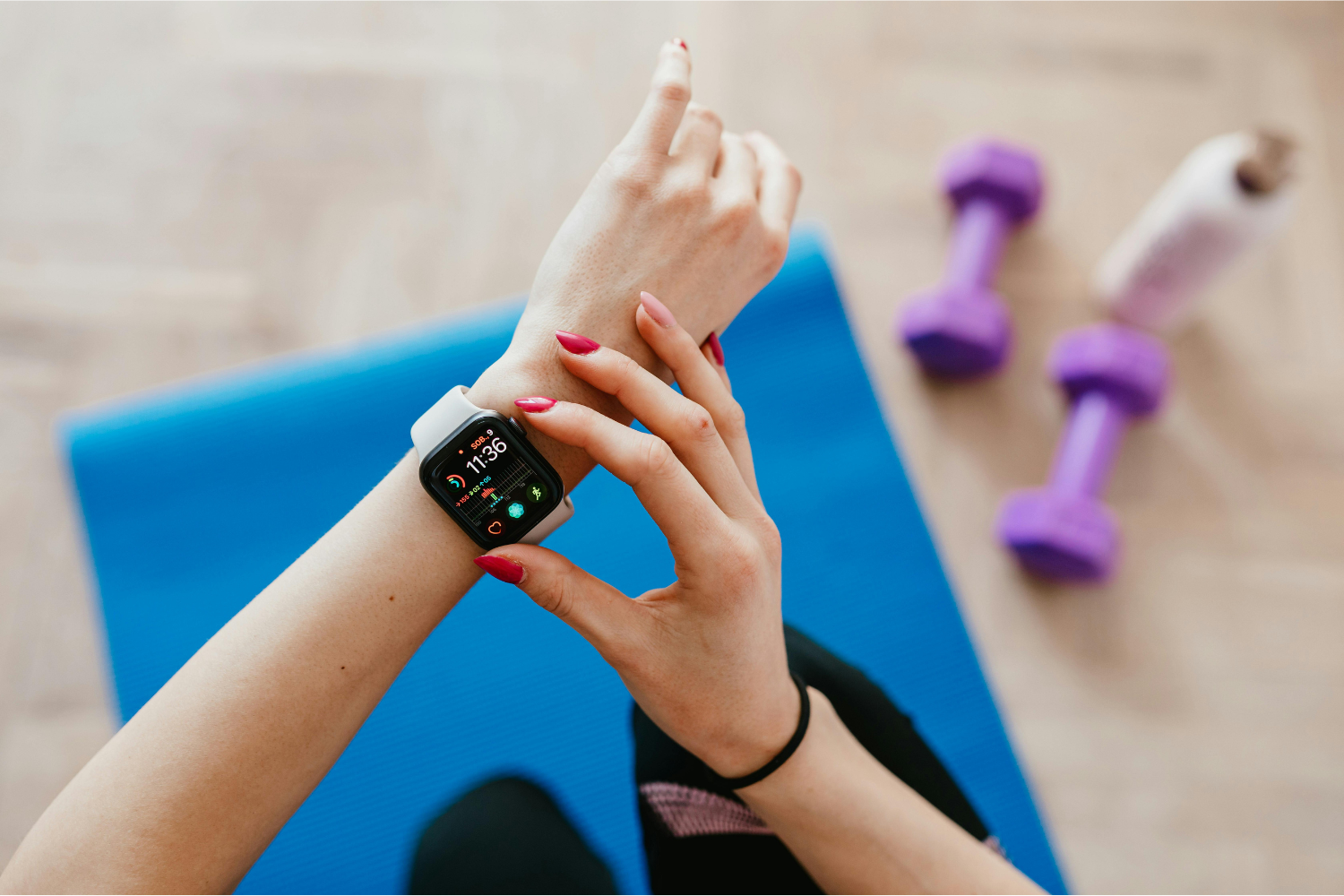
You glance at your smartwatch: your steps are up, your sleep score improved, your resting heart rate dropped. The app congratulates you, again. And yes, it feels good. But while you’ve mastered tracking your movement and activity with your wearable and the app, you might realise there’s something missing: your true biochemistry, your real lab data.
Apps tell you what your day looked like; your lab results tell you what your body has been doing under the surface. Without that, your health story is incomplete.
The Illusion of Control: Why Fitness Data Isn’t Enough
We live in an era of quantified self: steps, calories, sleep hours, heart rate variability. It gives a sense of control, sure – you feel you’re working on your health. But focusing only on lifestyle metrics can create an illusion of control.
Tracking steps alone doesn’t show whether your liver enzymes are climbing, how your thyroid is performing, or if your vitamin D level is low. You might tick all the boxes in the app yet still be off balance internally.
That’s because apps designed for fitness and wellness often treat health as a homogeneous game of numbers – without connecting to the complex story that real lab data tells. Without integrating this data, you’re missing a critical piece of the health puzzle.
The Power of Real Lab Data
When you bring lab test results into the mix, you start to see the true narrative of your health. From fasting glucose to lipid panels to hormone levels – these numbers expose hidden trends, early warning signs, and opportunities for prevention.
When you combine visible lifestyle tracking with invisible biochemistry, you have context, not just data.
According to Rock Health in The New Era of Consumer Engagement:
“Though consumers are willing to share their health data, they’re becoming more discriminating about whom they’re willing to share data with.”
The New Era of Consumer Engagement, Rock Health
This indicates that while many of us embrace digital health apps, we might still overlook or under-utilise our real clinical and lab data – and be less willing to expose it unless it feels secure and meaningful.
Real lab data isn’t just another number – it’s the biochemical baseline that turns steps and sleep into insight.
How to Track and Store Your Lab Data
So how do you go from a sea of PDF lab reports and occasional doctor’s visits to a structured, digital archive of your real lab data? Here’s a practical how-to:
- Digitise your results. Every time you have bloodwork or lab tests, request an electronic copy. Save it in a dedicated folder or app.
- Choose a tool that helps you organise and visualise those results. Instead of shoving them into a folder and forgetting, you want to track trends – so you see if your cholesterol is creeping up, your thyroid index drifting, or your vitamin D dropping. That’s where platforms like Ezm5 come in: secure storage, timeline views, and visual tracking.
- Tag and contextualise. Label each test by date, lab, test type (e.g., lipid panel, HbA1c, thyroid), and category (family member, if you track relative data). Add notes: “pre-holiday”, “post-training season”, “after diet change”.
- Review consistently. Set a reminder every 6 months or 1 year to review your lab trends, align them with what your wearable tells you, and decide whether to follow up with a healthcare provider.
- Share when appropriate. Use platforms that let you share a secure view with your clinician or family member if you choose. Trusted tools matter – your willingness to share depends on trust and clarity about what you share and why.
By integrating your lab results with the lifestyle tracking you already do, you gain a fuller, richer picture of your health journey—and you’re empowered rather than passive.
Stop Guessing. Start Knowing.
Your wearable tracks your steps. Your wellness apps track your habits. But your real lab data? That’s the story of what’s going on underneath it all. When you combine lifestyle tracking with actual test results, you’re no longer looking at isolated dots – you’re seeing a connected narrative.
That’s why storing and organising your lab data isn’t just a nice-to-have – it’s foundational to true preventive care and informed well-being.
At Ezm5, we believe that every person and every family deserves ownership of their full health history – activity metrics and real lab data alike. Because when you hold that story, you’re not just tracking health – you’re steering it.
Your Questions, Answered
Why track my lab results if I already use a health tracking app?
Because activity tracking shows what you do, lab results show how your body responds. Together you get a complete picture.
Why is lab data more reliable than fitness data?
Because lab results reflect your internal health: your organ function, metabolism, and risk markers. Fitness data shows your habits, but lab data shows your biology. Together, they give you the complete picture.
Is it safe to store and organise my lab data digitally?
Yes, provided you choose a platform that prioritises data security, privacy and allows you meaningful control over who sees what. That trust is critical for true health engagement.